


When Communities Push Back: Why St. Charles, Missouri Said “No” to a New Data Center
- Rich DuBose
- Dec 30, 2025
- 4 min read

In 2025, residents of St. Charles, Missouri delivered a clear message: large-scale digital infrastructure cannot move forward without community trust, transparency, and alignment with local priorities. A proposed billion-dollar data center—touted as an economic win—was ultimately withdrawn after sustained public opposition, prompting city leaders to pause all similar projects for at least a year.
The episode offers a revealing case study in how communities are reassessing the real-world costs and governance of the data-driven economy.
The Proposal at a Glance
The project—often referred to publicly as Project Cumulus—envisioned a massive data center campus on hundreds of acres in northwest St. Charles near Highway 370. Supporters emphasized:
Significant private investment (reported to be near $1B)
Long-term tax revenue potential
Positioning St. Charles within the Midwest’s growing digital-infrastructure corridor
Those arguments, however, failed to overcome public concern.
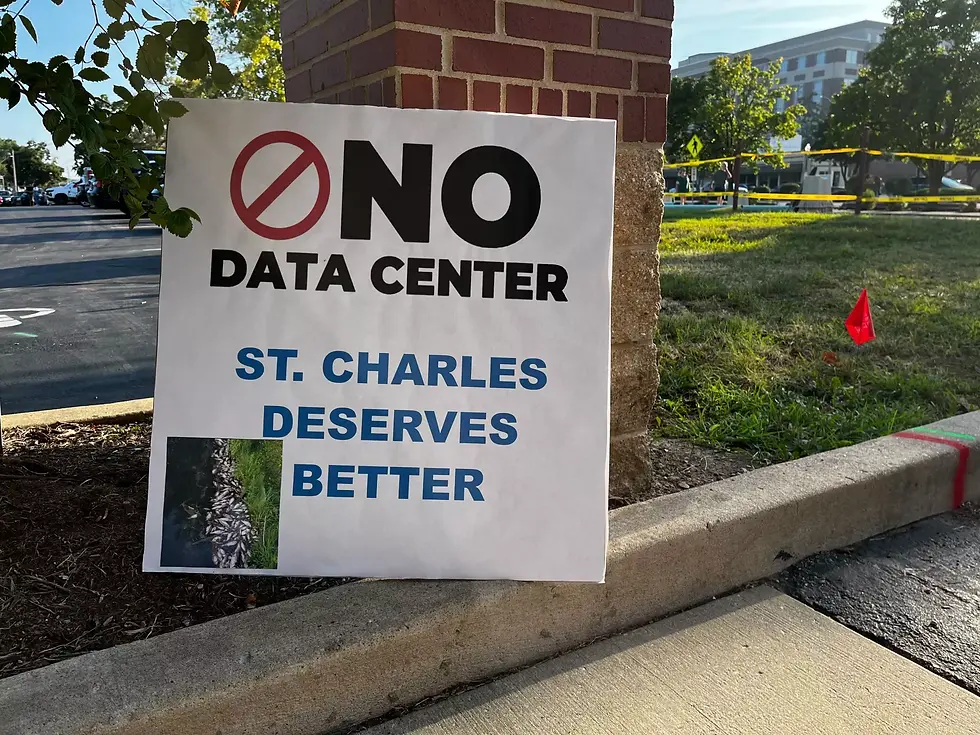
Why Residents Opposed the Project
Opposition at a Glance
Residents did not reject digital infrastructure itself. They rejected insufficient transparency and unclear community impacts.
Public opposition consistently centered on four issues:
Lack of transparency around project sponsors, tenants, and operational details
Environmental and water-risk exposure, particularly related to groundwater protection
Energy and utility strain, with unclear implications for grid capacity and residential costs
Quality-of-life impacts, including noise, light pollution, traffic, and long-term land use
Taken together, these concerns reflected a broader demand for clear disclosure, credible impact analysis, and meaningful public engagement—standards residents believed were not met.
1. Transparency and Trust
The developer operated under non-disclosure agreements that limited disclosure of the eventual tenant and technical details of the facility. For residents, the absence of clear answers to basic questions—who is building this, what exactly will run here, and with what impacts—created immediate distrust.
Transparency was not treated as optional; it was viewed as foundational.
2. Water and Environmental Risk
Residents raised alarms about the site’s proximity to groundwater and well-head protection areas, citing:
High water consumption for cooling
Risks to drinking-water quality
On-site fuel storage and spill scenarios
In a community sensitive to water security, these concerns carried significant weight.
3. Power Demand and Grid Impact
Data centers are inherently energy-intensive. Citizens questioned whether local electrical infrastructure could support the facility without:
Driving up residential utility costs
Requiring new transmission infrastructure
Increasing dependence on carbon-intensive generation
The absence of detailed, publicly accessible modeling reinforced skepticism.
4. Quality of Life
Residents also pointed to everyday impacts:
Continuous noise from cooling systems
Light pollution from a 24×7 industrial operation
Increased heavy-vehicle traffic
Long-term industrialization of a suburban area
The project was increasingly framed not as invisible digital infrastructure, but as a permanent industrial presence.
What City Leaders Did
As public opposition intensified, the political calculus shifted.
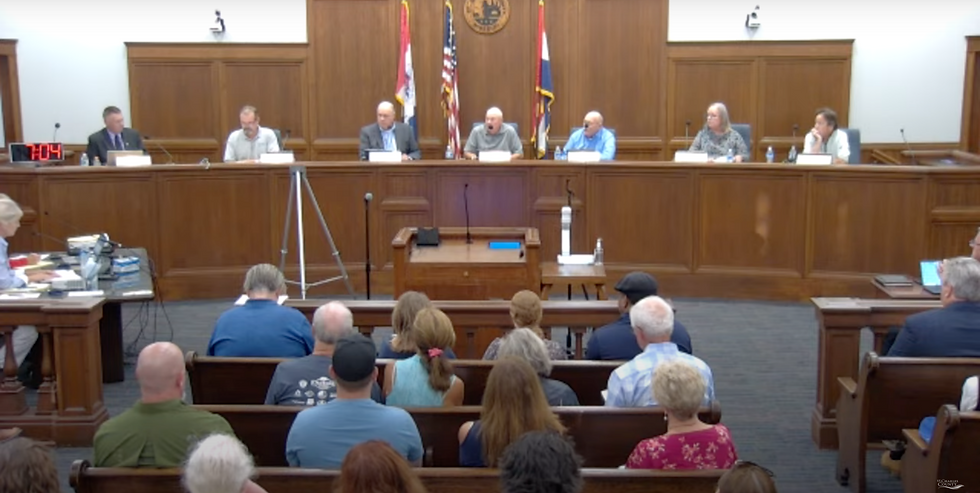
The Planning and Zoning Commission declined to advance the project.
Ahead of a final City Council vote, the developer withdrew its application.
Shortly thereafter, the City Council unanimously enacted a one-year moratorium on new or expanded data centers, allowing time to reevaluate zoning, infrastructure capacity, and public-engagement requirements.
City officials were explicit: sustained citizen opposition was decisive.
The Broader Lesson for Policymakers
The St. Charles outcome reflects a broader structural shift in civic expectations: voters are increasingly capable of detecting opacity in public-private infrastructure decisions—and they respond decisively when they encounter it.
Importantly, this reaction was not ideological. Opposition crossed the political spectrum, uniting environmentally focused voters, fiscally conservative homeowners, and politically moderate residents around a shared expectation: critical infrastructure decisions must be transparent, explainable, and publicly accountable.
In the context of data centers, AI infrastructure, and other large-scale digital systems, practices long considered routine—non-disclosure agreements, partial disclosures, and deferred answers—are now widely interpreted as governance risks rather than business necessities.
St. Charles illustrates that communities are not rejecting technology. They are rejecting decision-making without visibility.
An Additional Lesson Policymakers Should Not Miss: Speed Without Social License Backfires
Beyond transparency, St. Charles highlights a second lesson: moving faster than public understanding creates resistance, not momentum.
Accelerated timelines and limited early engagement hardened opposition and ultimately halted the project. The implication for policymakers is straightforward: social license must be established before formal permitting, not after.
Speed remains important—but speed without social license is increasingly a liability.
Policy Checklist: A Practical Guide for Future Projects
For policymakers evaluating data center or AI-infrastructure proposals, the St. Charles experience suggests a clear set of guardrails:
Disclose early, not late: Provide plain-language explanations of the project, tenant type, and intended use before formal approvals begin.
Treat NDAs as exceptions, not defaults: Define minimum public disclosures that apply regardless of commercial confidentiality.
Publish impact assessments in civic terms: Translate power, water, and environmental impacts into understandable, comparable metrics for residents.
Engage before positions harden: Hold community briefings and listening sessions while options are still flexible.
Align with local planning priorities: Demonstrate how the project supports comprehensive plans, resilience goals, and long-term land-use vision.
Validate claims independently: Use third-party or public-agency analysis—not just developer assurances—to build credibility.
Measure value beyond capital investment: Evaluate projects on community benefit, infrastructure strain, and long-term sustainability—not speed alone.


Comments